
The Space Race Has Changed: Private Companies Are Now at the Helm
When most people think of space exploration, they likely picture government agencies like NASA, Roscosmos, or ESA sending rockets into the cosmos. While these agencies have dominated space exploration for decades, the game is changing, fast. Private companies, like SpaceX, Blue Origin, and others, are taking the reins and transforming how we think about space. The future of space tech is now being written by innovators who are driven by profit, ambition, and the pursuit of the unknown.
New Players in the Space Game
It wasn’t long ago that the idea of private companies running space missions seemed far-fetched. However, thanks to billionaires like Elon Musk and Jeff Bezos, the narrative is now very different. Private companies are not only competing with government agencies, they’re often outpacing them in innovation and cost-effectiveness. In fact, the commercialization of space is quickly becoming one of the most exciting frontiers of the 21st century.
Let’s look at some of the companies that are pushing the envelope:
SpaceX: Changing the Rules of Rocketry
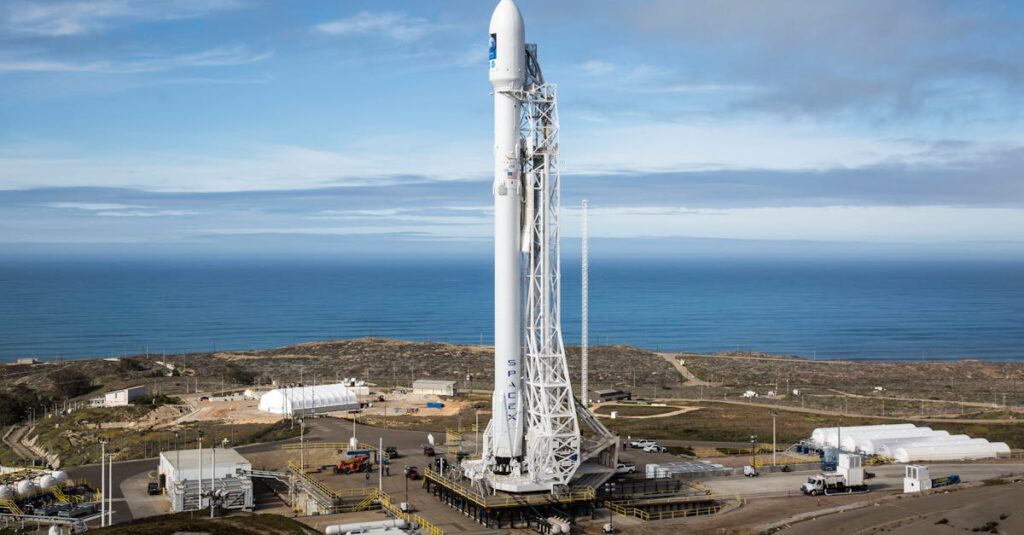
SpaceX, founded by Elon Musk in 2002, has become a trailblazer in the space tech industry. Its Falcon 9 rocket is a prime example of how private companies are disrupting traditional space industries. What makes Falcon 9 so impressive? It’s reusable.
Before SpaceX, rockets were one-time-use, meaning every launch involved building an entirely new rocket from scratch. SpaceX’s ability to recover and reuse rockets not only reduces costs but also accelerates the pace of space exploration. Falcon 9 has carried both cargo and astronauts to the International Space Station (ISS) and has even helped to establish the growing satellite network Starlink, aiming to bring affordable internet to the world. That’s a far cry from the space missions of the past, which often required years of planning and an immense budget.
Blue Origin: The Space Dream for All
Blue Origin, founded by Jeff Bezos in 2000, is another company making waves in space technology. Although they’ve been more low-key compared to SpaceX, they’re working hard to bring about the same level of innovation. The company’s New Shepard suborbital rocket is designed to take people into space for brief trips. But Blue Origin isn’t stopping there.
Bezos has been vocal about his vision for space colonization, focusing on creating a sustainable human presence beyond Earth. One of his key ideas is the O’Neill Cylinder, a large space habitat that could support millions of people living and working in space. This is part of a long-term vision to make space travel and living an everyday reality, not just for astronauts but for ordinary people as well.
Why Private Companies Are So Successful in Space
With government space agencies often bogged down by bureaucracy and budget limitations, private companies have an inherent advantage in the speed and flexibility they can offer. These companies are pushing technological limits in ways that government-funded organizations can’t. Here are a few reasons why:
- Cost Reduction: Thanks to reusable rockets, smaller satellite launches, and more efficient technologies, private companies are making space more affordable. SpaceX’s reusable Falcon rockets, for example, have saved millions of dollars per launch.
- Faster Innovation: SpaceX’s quick turnaround between launches (sometimes within weeks) is a testament to how rapidly private companies can innovate compared to government programs, which often take years to develop new technologies.
- Profit-Driven Motivation: Private companies, unlike government agencies, are motivated by profitability. This can lead to more creative and risk-taking innovations, as companies are often eager to find ways to make their investments work.
The Space Tech Industry Is Expanding Beyond Spacecraft
While rockets and spacecraft often steal the spotlight in discussions about space tech, there’s a huge boom happening in other areas as well. Private companies are developing a wide range of technologies that will be crucial for humanity’s expansion into space:
Space Tourism
We’re all familiar with the stories of billionaires like Musk, Bezos, and Richard Branson launching into space for a short trip. But what was once a dream for the ultra-wealthy is quickly becoming a reality for regular people, at least those with deep pockets. Space tourism is expected to be a multi-billion-dollar industry in the coming decades. Companies like Virgin Galactic are already selling tickets for suborbital flights, and SpaceX has plans for a commercial mission around the moon.
The real question is: How long will it take before these trips become affordable for the masses? If the rapid growth of space tech continues, it might not be as far off as we think.
Satellite Networks
Another area where private companies are making a massive impact is satellite technology. SpaceX’s Starlink is one of the most well-known satellite networks, aiming to provide high-speed internet to remote areas around the world. With over 1,000 satellites already in orbit, SpaceX’s goal is to offer global coverage.
Satellite constellations like Starlink have the potential to transform industries like communications, agriculture, and even disaster response by making reliable internet available everywhere. What’s more exciting is that SpaceX is leading the charge in developing these satellite networks, making space a critical part of global infrastructure.
Mining the Moon (and Beyond)
One of the more ambitious goals for space tech is asteroid mining, taking resources like platinum and rare metals from asteroids and the moon. Companies like Planetary Resources and Deep Space Industries are already working on technology to make this possible. It’s still early days, but the potential is enormous.
Mining in space could unlock vast quantities of resources that are rare on Earth, opening up new opportunities for technology and manufacturing. Think about it: precious metals used in smartphones, electric cars, and other tech could come from space, reducing reliance on Earth-based mining and possibly even supporting space colonies in the future.
The Road Ahead: Space Tech’s Boundless Potential
The rise of private companies in the space sector is more than just a trend, it’s the dawn of a new era in human exploration. With technology advancing at a rapid pace, the possibilities for space exploration are virtually limitless. In the coming years, we can expect to see even more private companies get involved in space missions, further driving innovation and reducing costs.
But what does this mean for the future? A few decades ago, the idea of humans living on Mars seemed like science fiction. Today, with companies like SpaceX developing technologies to make Mars missions a reality, it might be closer than we think.
The future of space tech is bright, and private companies are leading the charge. Whether it’s opening space tourism to the public, connecting the world with satellite internet, or paving the way for the colonization of other planets, we’re entering an era where space isn’t just for government-funded astronauts anymore, it’s for everyone.
Conclusion: The Sky Is No Longer the Limit
The next chapter in human space exploration will be defined by the innovations and ambitions of private companies. As more businesses invest in space technologies, the dreams of interplanetary travel and colonization could soon become reality. Space is no longer an unreachable frontier, it’s a potential industry that could change everything from the way we live on Earth to how we interact with the universe.
So, what’s the takeaway? Space isn’t just for governments anymore. It’s for companies that dream big and act fast. Who knows? You might even be the next person to book a ticket to space, thanks to the very companies that are making the stars feel a little closer.