
Introduction: More Than Just Stunning Aerial Shots
When you think of drones, your mind probably drifts to breathtaking aerial footage of landscapes, buildings, or exotic vacation spots. The popularity of drones for photography and cinematography has skyrocketed in recent years, with everyone from filmmakers to hobbyists capturing stunning shots from the sky. But did you know that drone technology is being used for far more than just snapping cool pictures? From agriculture to search-and-rescue missions, drones are proving to be incredibly versatile, and their potential is just beginning to be explored.
1. Drones in Agriculture: The Future of Farming
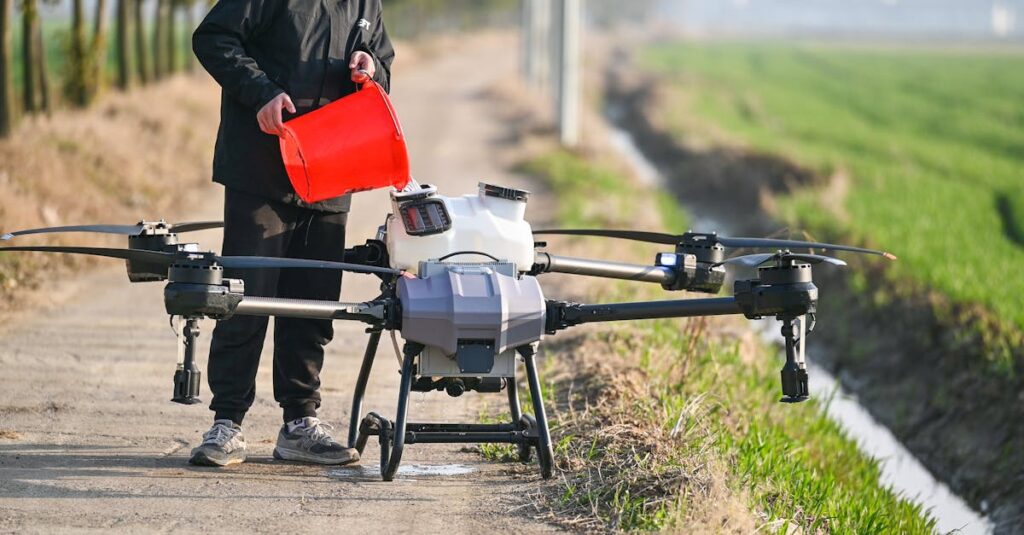
In the world of agriculture, drones are becoming an essential tool for farmers looking to increase efficiency and yield while reducing costs. Imagine a farmer being able to monitor an entire field without setting foot on it. Thanks to drones equipped with advanced sensors, that’s now possible. These drones can assess the health of crops, detect irrigation issues, and even spray pesticides or fertilizers with precision.
Take, for example, the use of drones in precision agriculture. In the past, farmers had to rely on guesswork when it came to crop health or needed to walk through fields, inspecting each plant by hand. Now, drones equipped with infrared cameras can provide a bird’s-eye view of crop conditions, pinpointing areas that are stressed or need attention. With this data, farmers can take targeted actions, like adjusting irrigation or applying nutrients, rather than using a blanket approach. This not only saves time but also minimizes waste and environmental impact.
The Benefits for Farmers
- Efficiency: Drones can cover large areas quickly and provide data in real-time.
- Cost-saving: By detecting problems early, farmers can prevent larger issues and avoid unnecessary treatments.
- Environmental Impact: Targeted application of fertilizers and pesticides reduces chemical runoff.
2. Drones in Emergency and Rescue Operations
Imagine being in a situation where time is of the essence, like during a natural disaster or a missing-person search. Drones have stepped in as a game-changing tool in emergency response situations. Equipped with thermal imaging and high-definition cameras, drones can fly over disaster zones and locate survivors, even in areas that are too dangerous for humans to reach.
In 2017, after a devastating earthquake hit Mexico City, drones were deployed to help locate survivors trapped in collapsed buildings. The drones’ ability to quickly scan large areas, combined with the real-time data they provided, allowed rescue teams to act fast, potentially saving lives. They were also used to inspect areas for further risk, such as damaged infrastructure, helping to guide emergency responders more safely.
Saving Time, Saving Lives
- Speed: Drones can access areas quicker than ground teams.
- Accuracy: With real-time imaging, drones can pinpoint exact locations of victims or hazards.
- Safety: Drones help assess dangerous environments without putting rescue teams at risk.
3. Drones for Delivery: The New Frontier
Now, let’s talk about something that’s getting a lot of attention: drone deliveries. While it might sound like a futuristic concept, the idea of using drones for delivering packages is already becoming a reality in certain parts of the world. Companies like Amazon, UPS, and Google are working on drone delivery systems that could drastically reduce delivery times and costs.
One of the most exciting applications of drone delivery is in remote or hard-to-reach locations. Imagine a small island community or a rural village that doesn’t have easy access to traditional delivery services. Drones can swoop in, deliver supplies, be it medical equipment, groceries, or even urgent documents, and return in a fraction of the time it would take a truck or boat. This could change the way we think about logistics, making remote communities more connected than ever.
What’s Driving This Trend?
- Speed: Drones can cut down delivery times significantly, potentially delivering packages in under 30 minutes.
- Cost-efficiency: Drones could reduce the need for fuel-guzzling delivery trucks and expensive manpower.
- Accessibility: Remote areas with limited infrastructure could benefit immensely from drone services.
4. Drones in Environmental Conservation
Beyond agriculture, drones are also being used to monitor and protect our environment. Conservationists are deploying drones to track endangered species, map forest cover, and even fight poaching. Drones equipped with sensors and cameras can fly over large areas of wilderness to gather data that would otherwise be difficult or impossible to obtain.
For example, in Africa, drones are being used to monitor wildlife and prevent poaching. Drones can fly over vast savannahs and forests, keeping watch for signs of poaching activity, like vehicles or people. When a potential threat is detected, conservation teams can respond quickly, often preventing harm before it happens. Similarly, drones are used to monitor illegal logging and track forest health, providing valuable data to organizations working to preserve ecosystems.
Environmental Monitoring at Its Best
- Wildlife Protection: Drones can monitor animals in their natural habitat without disturbing them.
- Forest Health: Drones can track deforestation and help map out protected areas.
- Anti-poaching: Drones provide an aerial advantage in spotting illegal activity in remote locations.
Conclusion: The Sky’s the Limit
As drone technology continues to evolve, it’s clear that their applications go far beyond capturing pretty pictures. From revolutionizing agriculture to saving lives in emergency situations, drones are becoming an indispensable tool in industries all over the world. They’re helping us solve problems faster, more efficiently, and in ways that were once thought impossible. And the best part? We’re just getting started.
The potential of drones is still largely untapped. As technology advances, expect drones to become even more integrated into our daily lives, changing everything from how we farm to how we respond to emergencies. So, the next time you see a drone in the sky, remember: it’s not just taking photos, it might be doing something that could change the world.